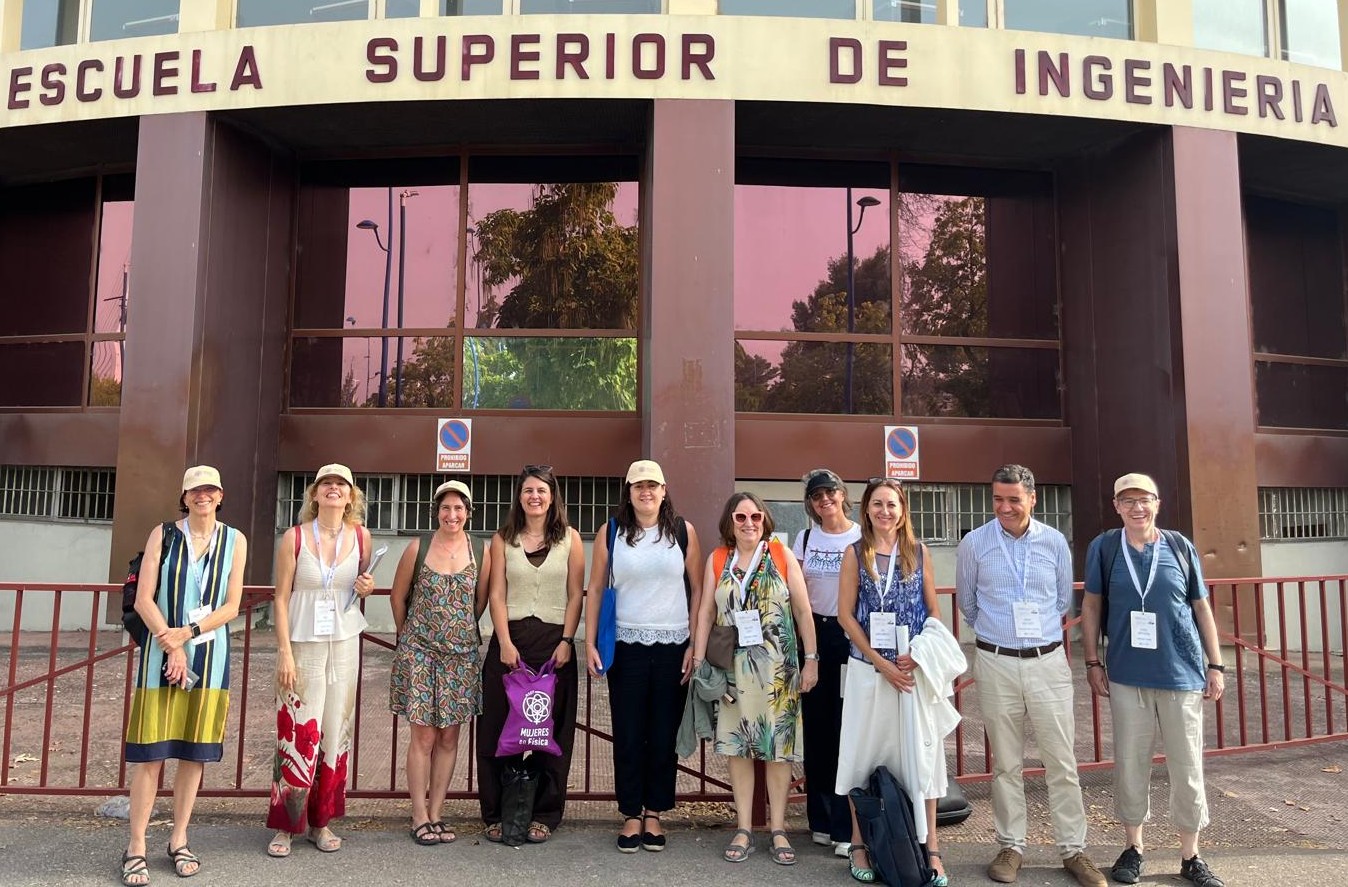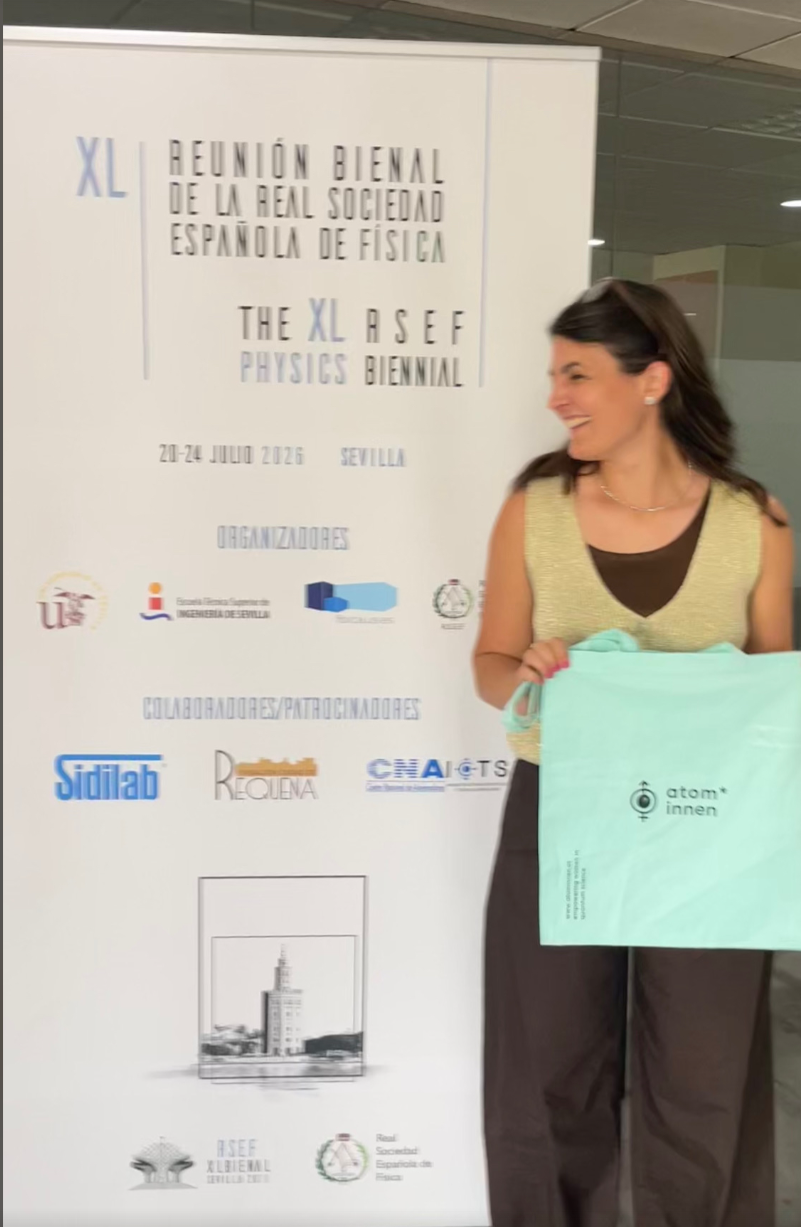

What does nearly 40 years of data tell us about women in physics? This question was at the heart of the Simposio Mujeres en Física 2026, organized by the Women in Physics Group of the Real Sociedad Española de Física (RSEF) at the Escuela Técnica Superior de Ingeniería (ETSI) of the University of Seville.
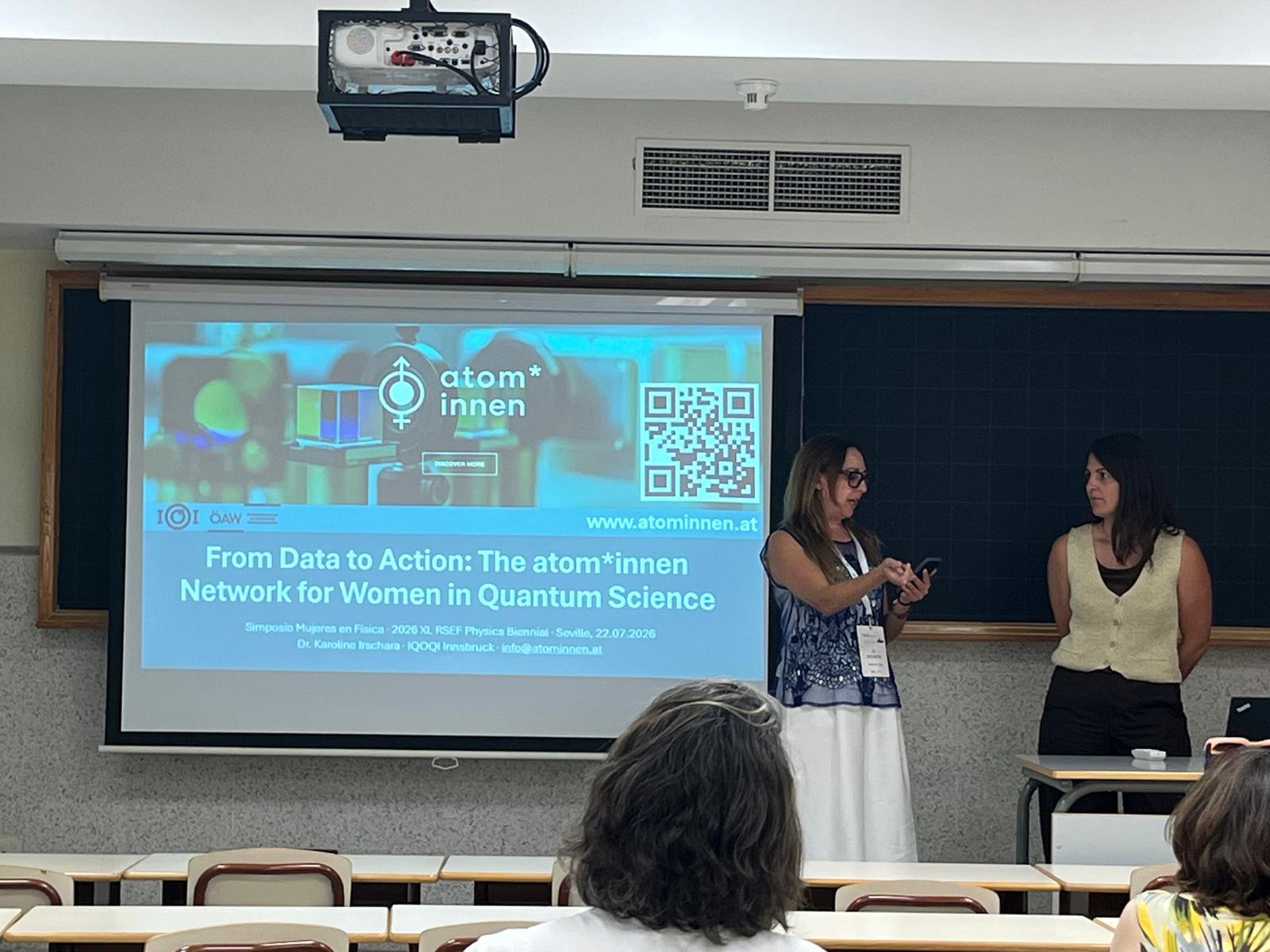
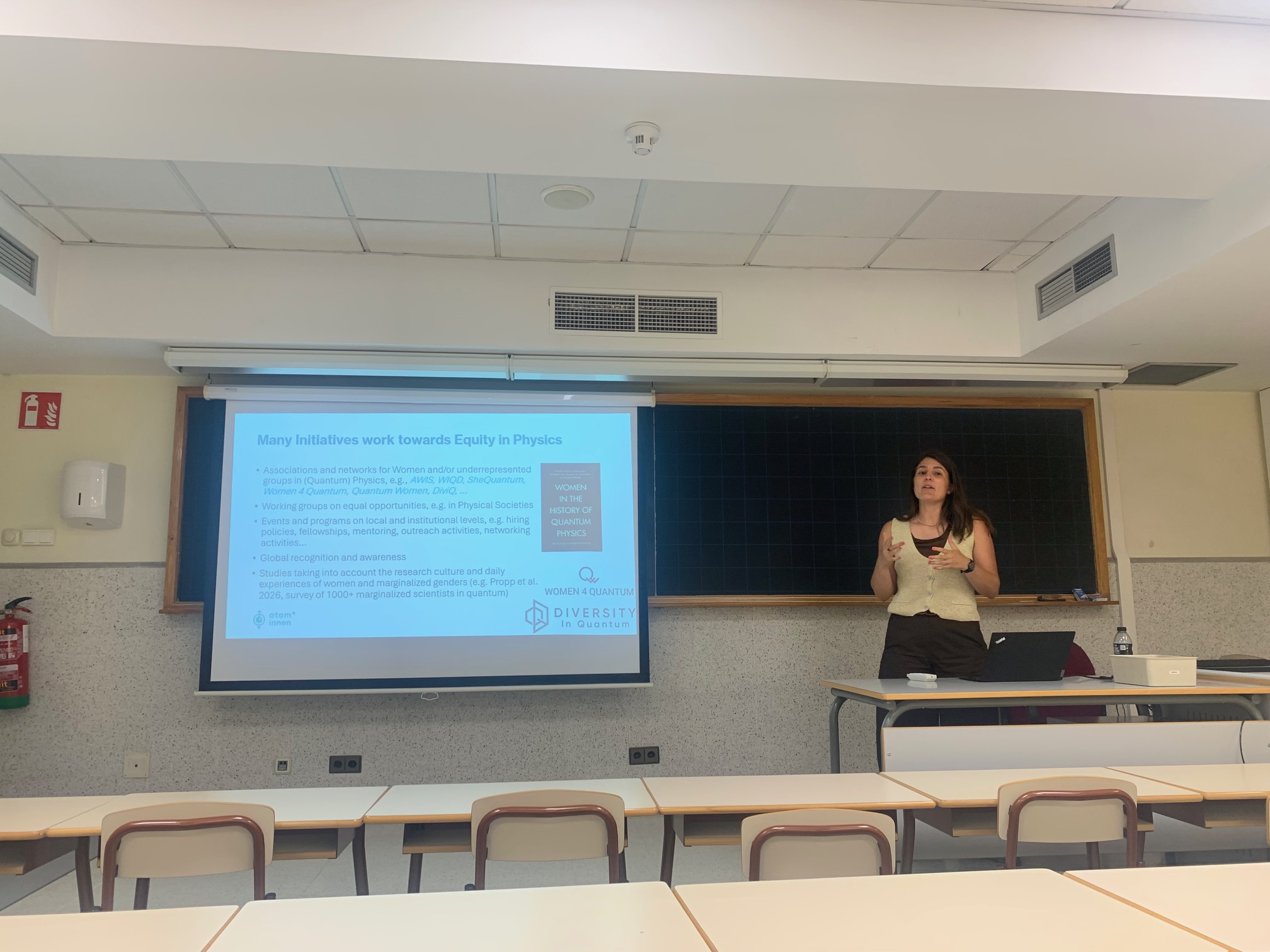
Representing atom*innen, our Gender Officer Karoline Irschara introduced the platform, showcased our latest data visualizations, presented the new #PhysicsCounts campaign, and demonstrated how atominnen combines data, visibility, networking, and community to foster a more inclusive quantum ecosystem.
The symposium brought together researchers from across Spain to discuss the current state of gender equality in physics and to share research findings, experiences, and best practices. Beyond presenting our own work, the event provided an excellent opportunity to exchange ideas with colleagues working on similar challenges.
One of the central messages of the symposium was the importance of long-term data collection. For more than 20 years, the Women in Physics Group of the RSEF has been collecting and analysing gender-disaggregated data on the physics community in Spain. These data provide valuable insights into both areas of progress and persistent structural barriers. A particularly striking finding concerned the participation of women in undergraduate physics programmes: Despite almost four decades of observation, the proportion of women has remained remarkably stable, increasing only slightly from around 27% in 1985 to approximately 28% today. While annual figures fluctuate, the data reveal no sustained long-term upward trend. This resonates with the fact that we published here: Since 10 years, the share of women enrolled in physics Bachelor's programmes in EU countries is steady around 30%.
Several presentations also highlighted that gender inequalities emerge long before students enter university and continue throughout academic careers. Structural and institutional factors shape these disparities, demonstrating that individual efforts alone are insufficient to achieve lasting change.
Another important topic was the concept of academic recognition. Speakers emphasized that many activities essential to research environments—including mentoring, peer review, committee work, outreach, and community building—are disproportionately carried out by women while often receiving limited recognition. Broadening the understanding of academic excellence is therefore an important step towards creating a more inclusive research culture.
We would like to sincerely thank Pas García-Martínez, Alberto Martín-Molina, and the entire Women in Physics Group of the RSEF for the invitation and for organizing such an inspiring symposium. It was a pleasure to contribute to these discussions, connect with researchers from across Spain, and strengthen our international network.
Over the coming weeks, atom*innen will also publish dedicated data visualizations highlighting the situation of women in physics in Spain. Stay tuned!