News

Quantum

On January 30, WIQD (Women in Quantum Development) will host an inspirational talk by Prof. Rosario González-Férez, Full Professor at the Universidad de Granada and advocate for diversity in quantum science. She’ll share her personal journey, challenges, and achievements, as well as insights from the Women For Quantum collaboration and their Manifesto of Values.

Atom*innen will take part in this opportunity to learn about inclusivity in quantum, hear from an award-winning scientist, and connect with fellow quantum enthusiasts.

Date: January 30, 2025
Time: 12:30–13:30
Locations: Online & livestreamed in Amsterdam, Delft, Eindhoven, Enschede and Leiden

Registration via Eventbrite and further info via WIQD

Hashta

The Austrian Academy of Sciences invites everyone to the international travelling exhibition "The Marie Curies of the Mediterranean". This exhibition celebrates the lives and achievements of female researchers from the Mediterranean region who have received or contributed to the prestigious Marie Curie Fellowships from the European Union.

Translated into nine languages, the exhibition has been displayed across Europe, Asia, Africa, and America, showcasing scientists from 22 countries, 19 of which are Mediterranean. Its goals are to inspire future generations, highlight the scientific talent of the Mediterranean, and increase the visibility of women in science.

The opening program includes presentations by fellowship recipients and a panel discussion on empowering women in science.
 

Opening:
Monday, January 20, 2025, at 5 PM
Sitzungssaal, Austrian Academy of Sciences
Dr. Ignaz Seipel-Platz 2, 1010 Wien

Registration is kindly requested: Click here to register
Program: Click here to see the program

Exhibition Duration:
January 21 to March 9, 2025, weekdays 8:00 AM – 5:00 PM

Location:

Austrian Academy of Sciences, Aula
Dr. Ignaz Seipel-Platz 2, 1010 Wien

One in two female scientists say they have experienced sexual harassment at work. Today, November 25th, marks the International Day for the Elimination of Violence against Women, highlighting the critical challenges we still have to overcome.

Here is some data:
1/3 woman in the EU experienced gender-based violence.
80% of disabled women are victims of violence.
75% of Islamophobic attacks target women.
85% of transgender people are assaulted in their lifetime.

Let's unite to end violence against women and underrepresented groups womenandgirlsinphysics hashtagdiversityandinclusioninSTEM hashtagendviolenceagainstwomen hashtag25november hashtagnoexcuse hashtagunite

hashtag(data from Eurostat, Ipsos, UN Women, NousToutes)

The following visualizations present how the percentage of women enrolled in Physics bachelor's, master's, and PhD degree programmes has evolved over time across different European regions. The data derive from Eurostat and cover the period from 2015 to 2023 (status: November 2025).

Use the buttons below to switch between educational levels or to display all visualizations at once.

Bachelor — Regional Trends Over Time

Central European Countries

Southeastern European Countries

Northern European Countries

Western European Countries

Southern European Countries

With the following overview we want to collect prizes, fellowships, and funding opportunities for women in Physics. Click on a country below to explore the available programs and discover funding options tailored to different stages of your academic journey.

Berta Karlik Fellowship

Austrian Academy of Sciences
Field: STEM fields
Target group: Leading female researchers with at least 10 years of academic experience
Amount: Up to €5,000/month + travel costs + €10,000 for outreach
Applications: Every year

Learn more

Award of Excellence

Federal Ministry for Women, Science and Research
Field: All academic fields
Target group: Doctoral graduates from Austrian universities (40 awards per year)
Amount: €3,000
Applications: Every year

Learn more

Beyond [her] Lab

Startup Tirol
Field: All academic fields
Target group: Female researchers and students in doctoral or master’s programs from western Austria with business ideas
Amount: Two-day bootcamp

Learn more

FemCareer Fellowship

University of Innsbruck
Field: Various (including Physics)
Target group: Female early-career postdocs or PhD graduates
Amount: 36-month postdoc position
Applications: Every year

Learn more

FWF ASTRA Award

Austrian Science Fund (FWF)
Field: All academic fields
Target group: Internationally visible researchers; half of the awards go to women
Amount: €500,000–€1 million over five years

Learn more

grants.at database

OeAD (Austrian Agency for Education and Internationalisation)
Field: All academic fields
Target group: Students, graduates, and researchers
Description: Comprehensive database of scholarships and grants in Austria.

Learn more

L’ORÉAL Fellowships for Women in Science

L’Oréal Austria
Field: Medicine, Natural Sciences, Mathematics
Target group: Young female researchers
Amount: Up to €25,000 for 6–12 months
Applications: February 1 each year

Learn more

STE.fania Foundation

STE.fania
Field: STEM fields
Target group: Female school-leavers or students in STEM fields
Amount: €600–€1,000/month + mentorship

Learn more

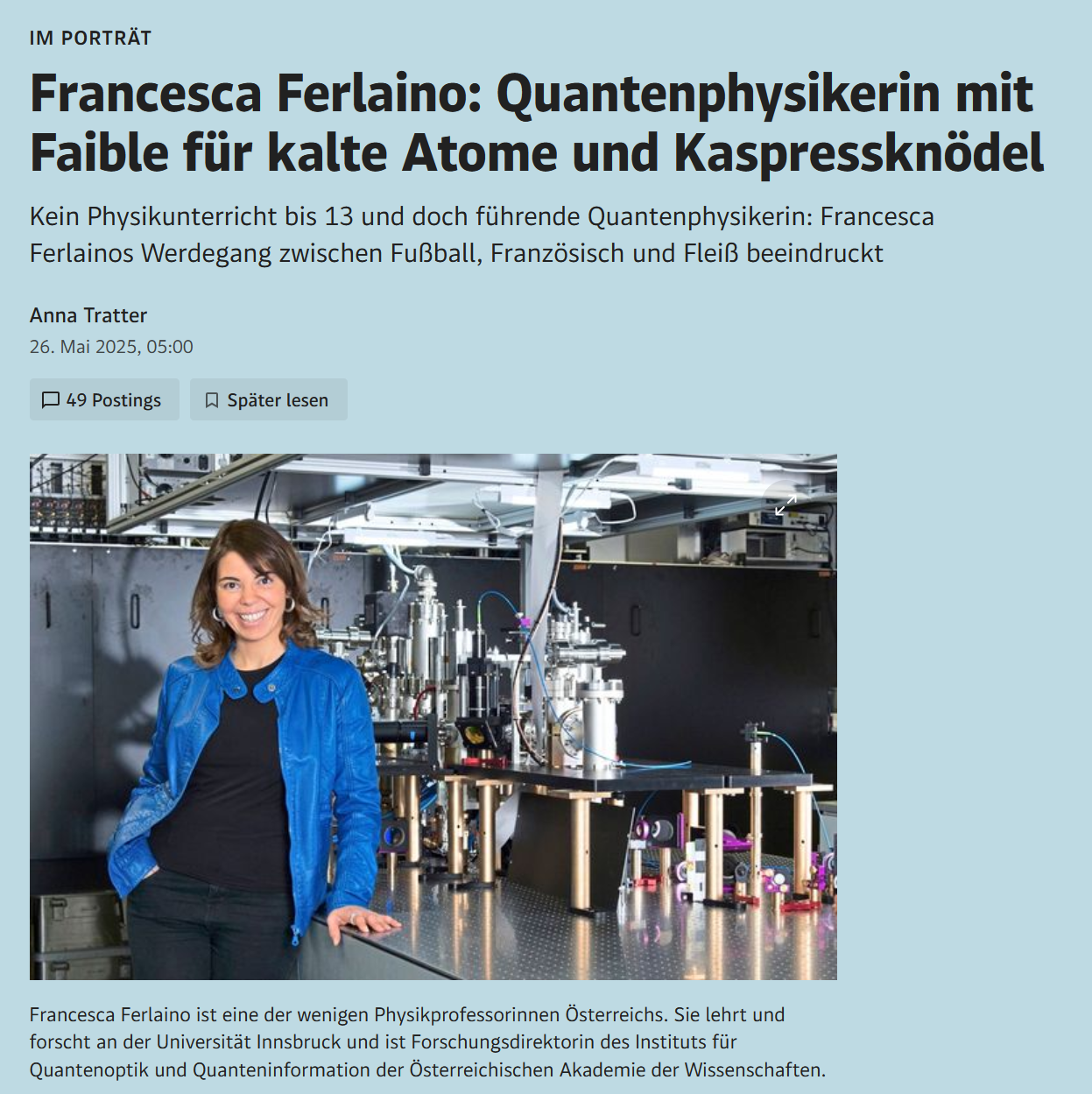
Francesca Ferlaino, a prominent physicist in Innsbruck, Austria, focuses on uncovering quantum phenomena at temperatures approaching absolute zero. Originally from Naples, she arrived at the University of Innsbruck in 2006 as a guest scientist to study ultracold molecules and has since made Austria her home. She is currently serving as a professor and scientific director at the Austrian Academy of Sciences’ Institute for Quantum Optics and Quantum Information in Innsbruck.

At a recent gala where she received Austria’s “Person of the Year” award, Ferlaino reflected on how being recognized as an Italian felt meaningful and inspiring, especially for the international scientific community. Her research into unknown states of matter has led to significant findings, including observing “suprasolid” states, where atoms display properties of both liquids and solids simultaneously—a groundbreaking discovery in quantum physics.

To study quantum interactions, Ferlaino cools atoms to near absolute zero, allowing the observation of interactions without direct contact, particularly with highly magnetic erbium atoms. These atoms can exchange information across distances without touching, a phenomenon with potential to revolutionize data transmission.

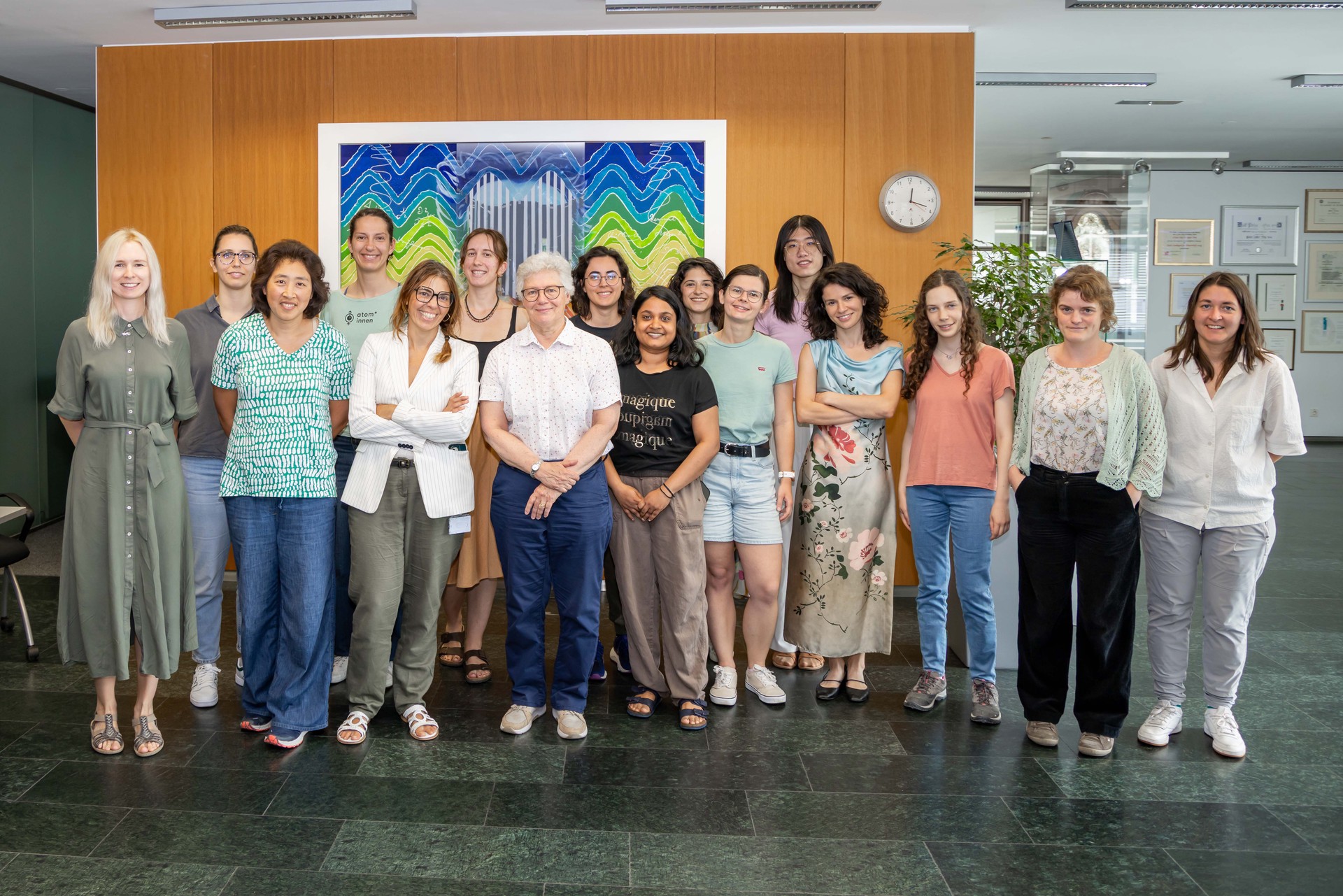
When asked about her scientific role models, such as Erwin Schrödinger and Anton Zeilinger, Francesca Ferlaino humbly declined comparison. She noted also that, in her experience, scientific breakthroughs are collaborative efforts rather than individual genius. With few women in her field, she founded atom*innen. 


Ferlaino champions fundamental research, advocating that advances in science often stem from basic discoveries rather than immediate applications. As highlighted by Henrietta Egerth-Stadlhuber, the Managing Director of the Austrian Research Promotion Agency FFG, foundational research may take decades to impact humanity but is crucial in the long term, serving the collective needs of society.